
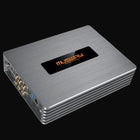
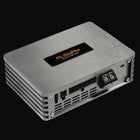
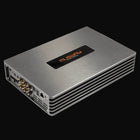
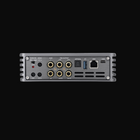
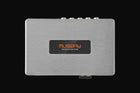
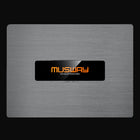
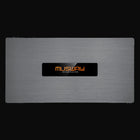
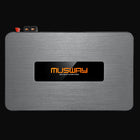
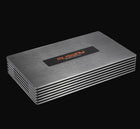
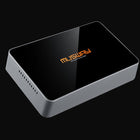
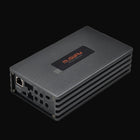
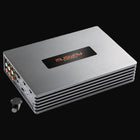
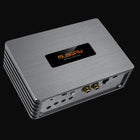
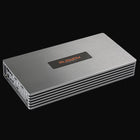
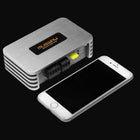
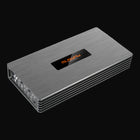
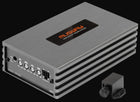
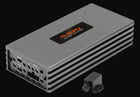
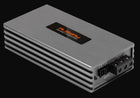
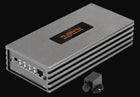
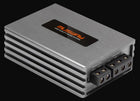
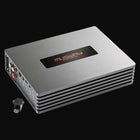
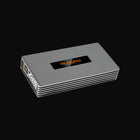
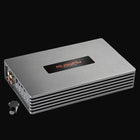
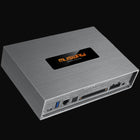
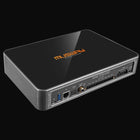
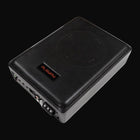
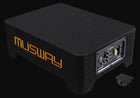
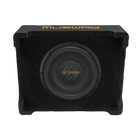
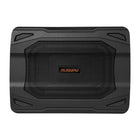
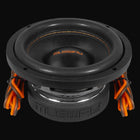
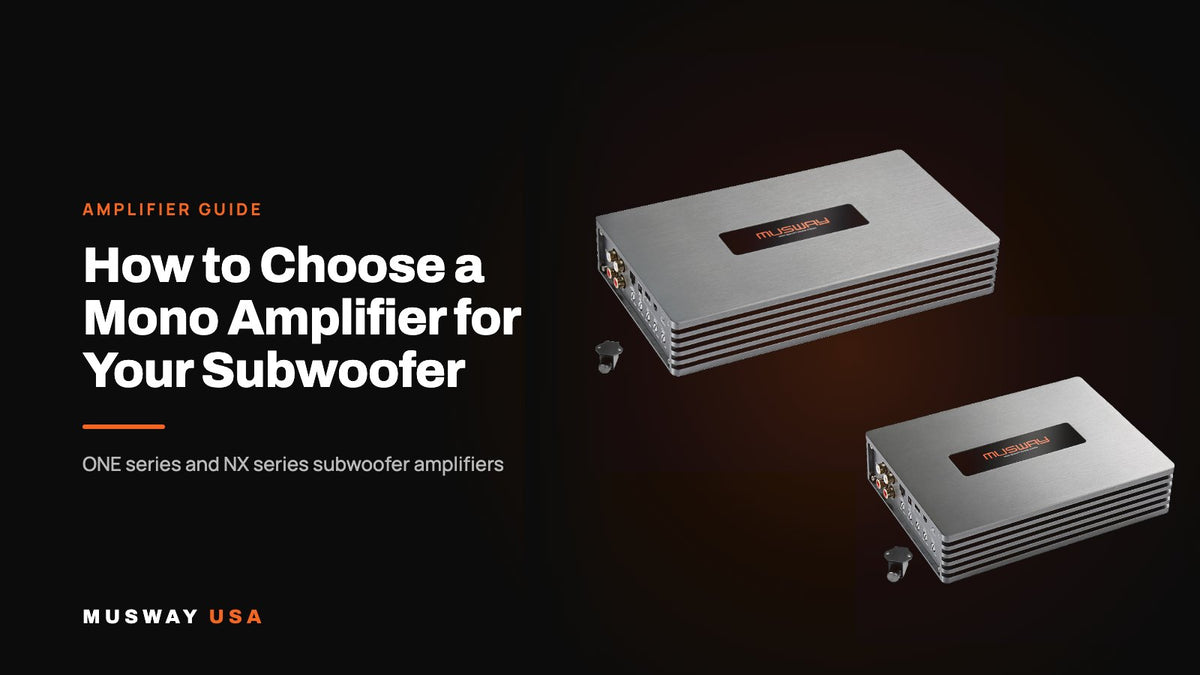
A subwoofer is only as good as the amplifier behind it. Too little power and the bass sounds weak and distorts early. The wrong impedance and the amplifier overheats or shuts down. The right mono amplifier, on the other hand, makes even a compact subwoofer sound deep, tight and effortless.
This guide explains how to choose a mono amplifier, which specifications matter, and how the Musway ONE series fits different subwoofer setups.
What is a mono amplifier?
A mono amplifier, also called a monoblock, has a single channel designed for one job: powering subwoofers. It includes a low-pass filter so only bass frequencies reach the subwoofer, and it is built to stay stable at low impedance, where it makes the most power. Modern mono amplifiers use Class D technology, which converts more of the vehicle's electrical power into sound and less into heat, so they stay compact and cool.
Step 1: Match RMS power to your subwoofer
Every subwoofer has an RMS power rating, the continuous power it can handle. Choose an amplifier that delivers roughly 75% to 150% of that rating at your final impedance. If you run two subwoofers, add their RMS ratings together.
Always compare RMS ratings, not peak or maximum power. RMS is the number that reflects real, continuous output.
Step 2: Plan your impedance
An amplifier's power changes with impedance. The Musway ONE.600 is a good example: it delivers 250 watts RMS at 4 ohms, 400 watts RMS at 2 ohms and 650 watts RMS at 1 ohm. The same amplifier is a modest match or a powerful one depending on how you wire your subwoofer.
Dual voice coil subwoofers let you choose. Musway subwoofer systems use a 2 + 2 ohm configuration, which can be wired to 1 ohm in parallel or 4 ohms in series, so you can land on the impedance where your amplifier performs best. Never go below the lowest impedance the amplifier is rated for.
Step 3: Look at the filters and controls
Good mono amplifiers give you the tools to shape and protect the bass:
- Low-pass filter: sets the highest frequency the subwoofer plays, so it blends with your speakers.
- Subsonic filter: removes frequencies too low to hear, protecting the subwoofer from over-excursion, especially in ported boxes.
- Bass boost: adds output around a chosen bass frequency. Use it carefully, as it raises the risk of clipping.
- Phase control: aligns the subwoofer with the front speakers so bass sounds like it comes from the front of the cabin.
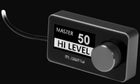
- Remote level control: lets you adjust bass from the driver's seat to suit each song.
The ONE.1500, for example, offers a 40 to 150 Hz low-pass filter, a 10 to 40 Hz subsonic filter, 0 to 18 dB bass boost and 0 to 180 degree phase shift.
Step 4: Think about DSP integration
If you run a Musway DSP amplifier or processor, the subwoofer amplifier should be fed from a processed output so the DSP can handle crossover, EQ and time alignment for the subwoofer. Musway mono amplifiers with the PURE IN>OUT function let you bypass the internal crossovers for pure amplification, which is ideal when an external DSP already does that work. The ONE.1500 is designed to pair with DSP units such as the M4+, M6 and D8, and with stand-alone processors such as the TUNE12 and DSP68.
Step 5: Factory radio compatibility
If you are keeping the factory radio, look for high-level inputs with error protection and automatic turn-on. Musway ONE series amplifiers include an Intelligent High-Level Input protected by EPS (Error Protection System), designed so the vehicle's diagnostic system does not report errors, and automatic turn-on for simpler installs.
The Musway mono amplifier lineup
| Model | Rated power | Highlights |
|---|---|---|
| ONE.600 | 250 / 400 / 650 W RMS at 4 / 2 / 1 ohm | Compact, remote bass level controller included, 6 Hz to 1.25 kHz response |
| ONE.1000 | 1050 W RMS at 1 ohm | Variable low-pass and subsonic filters, remote level control |
| ONE.1500 | Up to 1550 W RMS at 1 ohm | Full bass controls, PURE IN>OUT, Start-Stop compatible |
| ONE.2000 | See product page | MX series, EPS and PURE IN>OUT for DSP integration |
Musway also offers the NX series mono amplifiers, including the NX400.1, NX600.1 and NX800.1. Check each product page for power ratings at your impedance.
Example pairings
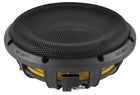
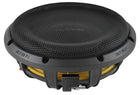
- One flat subwoofer behind a seat: an MWS822 or MWS1022 with a ONE.600.
- A compact trunk enclosure: an MF108Q or MR208Q system with a ONE.600 or ONE.1000.
- A DSP-based system with serious bass: an M6 or D8 for the speakers and a ONE.1500 on a processed subwoofer output.
Installation and gain setting tips
- Use a power and ground wire sized for the amplifier's current draw, and fuse the power wire close to the battery. The ONE.600 and ONE.1000 include an external mini ANL fuse holder and fuse.
- Keep the ground short and connected to bare chassis metal.
- Set the gain to match the input signal, not as a volume control. Too much gain causes clipping, which damages subwoofers.
- Start with bass boost off and add it only if needed.
- Mount the amplifier where air can circulate around the heat sink.
Frequently asked questions
Can I use a mono amplifier with a factory radio?
Yes. Musway ONE series amplifiers include high-level inputs with error protection and automatic turn-on, so they connect to factory speaker wires.
Is more power always better?
Only up to what your subwoofer can handle. Match the amplifier's RMS output at your impedance to the subwoofer's RMS rating, and set the gain correctly.
Should I add a bass knob?
A remote level control is one of the most useful upgrades because recordings vary so much. The ONE.600 includes one, and the RLC Bass Knob is available separately.
Do I need a mono amplifier if I already have a DSP amplifier?
For most systems, yes. A DSP amplifier powers the speakers, and a dedicated mono amplifier gives the subwoofer its own power supply and the headroom deep bass needs.
The bottom line
Choose a mono amplifier by matching RMS power at your final impedance, checking the filters and controls, and planning how it connects to your factory radio or DSP. Get those details right and a Musway ONE series amplifier will deliver bass that is deep, clean and reliable for years.
Not sure which product suits your car?
Tell the US team your vehicle, speakers and goal. They will spec it with you first.
